OpenAI textGrain gives developers a new reason to review how they record AI involvement in published text. For a platform team, the useful question is where watermarking would add evidence to an existing content workflow, and what happens when that evidence is missing or wrong.
Our recommendation is to evaluate it as an additional provenance signal in a bounded pilot. Keep editorial approvals, version history and human review in place before expanding its role.
Research checked October 5, 2026 (UTC). This guide reviews four official sources and provides editorial analysis. We have not tested an account’s watermarking controls, verified its eligible models, or received text-detector access.
textGrain availability: three separate questions
OpenAI’s October 5 announcement separates the rollout into three parts:
- API generation: customers worldwide can opt in for selected models starting October 5. Watermarking remains off by default.
- ChatGPT and Codex: eligible text outputs across all plans in the EU will receive watermarks over the coming weeks. This is not a global default at launch.
- Text detection: access initially requires approval for researchers and expert organizations. Applications opening does not make the detector publicly available.
For a product roadmap, track generation eligibility and verification access as separate dependencies. A team might be able to enable a signal before it can independently evaluate detection. That is a reason to narrow a pilot’s success criteria and customer promises.
How textGrain changes the text
The official provenance FAQ describes a statistical pattern created through the model’s choices of words or word pieces. It does not insert hidden characters, invisible spaces or special punctuation. The FAQ places API controls in project or organization settings.
The textGrain technical report describes a tradeoff between watermark evidence and the randomness retained during generation. It uses a budget for average sampling-entropy loss, grouping vocabulary tokens into blocks while preserving their relative probabilities within each block. Its theoretical guarantees depend on stated assumptions; the authors also call for empirical calibration with deployed keys and finite-precision computation.
Our deployment takeaway: include output diversity in evaluation. A drafting product may need several genuinely different suggestions from one prompt. Measure whether those suggestions remain useful, alongside correctness, latency and editorial acceptance. A mechanism-level guarantee does not supply those application-specific results.
What the published detection numbers establish
At a target 1% false-positive rate, OpenAI reports approximately 80% detection for 200-token psychology-style passages and 95% for 400 tokens, with substantially poorer results for mathematics. These are evaluation-specific results.
A procurement review should ask for results on its actual document mix before choosing thresholds. The relevant question is how often a system makes the wrong decision on your inputs, including ordinary edits that happen between drafting and publication.
Short text, code and translation need separate evaluation
For headlines, snippets and short customer replies, we would avoid a workflow that requires every output to produce a positive detection result. For code, JSON and rigid templates, the published prose results do not establish a workload-specific detection guarantee. Treat this as an unvalidated use case until appropriate evidence is available; naming Codex in a rollout announcement does not settle that question.
The FAQ also warns that substantial paraphrasing or translation can make watermarks undetectable. A multilingual publisher should therefore evaluate the final language and edited version, rather than infer downstream behavior from an English first draft.
Can you send text to the public Content Provenance API?
The current Content Provenance API documentation describes public verification of supported images and audio. Its text-verification section directs organizations to apply for access, with case-by-case approval. Do not adapt an image-upload example into a promised public text-checking feature.
In that API’s documented media responses, checks are specific to supported signals such as C2PA and SynthID. The service does not claim universal detection across AI providers. These modality and coverage boundaries matter when a product combines text, images and voice.
For example, an editorial system could maintain separate records for an article’s drafting history, an illustration’s image credentials and a narration’s audio provenance. Collapsing them into one article-level “AI verified” badge would hide which evidence was actually checked. Our Gemini 3.8 TTS guide covers the separate model and workflow choices involved in generated narration.
Who should pilot it, and who should wait?
A reasonable pilot candidate: a publisher or platform that controls text generation, retains version history, and wants to evaluate an additional transparency measure. Choose one low-stakes content class with a clear owner and a reversible deployment plan.
A poor fit for immediate automation: a moderation, hiring or academic-integrity system that needs to decide whether a named person wrote a passage. OpenAI says detection cannot quantify human contribution, and non-detection cannot prove human authorship. Its announcement explains those limits.
The FAQ further cautions that provenance does not establish a creator’s identity, legal ownership, accuracy or whether content was edited. Signals do not reveal the user, organization or prompt.
Our editorial judgment: require evidence about the work itself when reviewing an authorship concern, such as drafts, sourcing and an opportunity for the writer to explain their process. Do not turn a detector score into a percentage of human effort or a misconduct verdict.
Watermarking also leaves ordinary application-security questions open. A platform still needs to decide who can change provenance settings, access retained drafts, and approve publication. Those controls belong alongside the permissions and audit practices in our AI agent security guide.
A practical decision checklist for platform teams
This is our proposed pilot design, not a claimed OpenAI setup procedure:
- Define the decision. Write down whether the pilot measures transparency, output quality or review efficiency. Avoid success criteria that depend on proving a person’s authorship.
- Verify your deployment. Check the exact model, serving route, account settings and regional rollout before changing anything. Record what you can actually access; this article does not certify a supported-model list for your account.
- Separate permissions. Confirm whether detector access is available to your organization. If it is not, limit the pilot to questions you can measure, such as generation quality and operational overhead.
- Build a representative test set. Include your normal lengths, languages, content types and editorial revisions, plus human-written controls. Use synthetic or appropriately authorized material and protect confidential drafts.
- Preserve a minimal history. Within your retention policy, record generation settings, relevant version identifiers and editorial approvals. Restrict access and avoid retaining sensitive prompts merely because a pilot exists.
- Decide how ambiguity is handled. Design an inconclusive outcome, a human-review path and a way to challenge an incorrect assessment. Estimate reviewer workload before scaling.
- Set an exit condition. Choose acceptable quality and operational thresholds in advance. Stop or revise the pilot when it fails those thresholds; keep customer-facing claims aligned with what was measured.
What evidence would change our recommendation?
We would consider broader deployment after seeing independently reproducible results for the target languages and document types, reliable performance after routine editing, clear coverage documentation, and workable detector access for the intended use.
For a developer product, we would also want measurements of response diversity, latency and maintenance effort under the team’s actual generation settings. For a publisher, false allegations, review burden and the ability to resolve disputes matter as much as a headline detection rate.
Bottom line: start with a narrow, measurable provenance pilot if its costs and access requirements fit your workflow. Keep the claims modest, preserve the editorial record, and expand only when evidence supports the next decision.
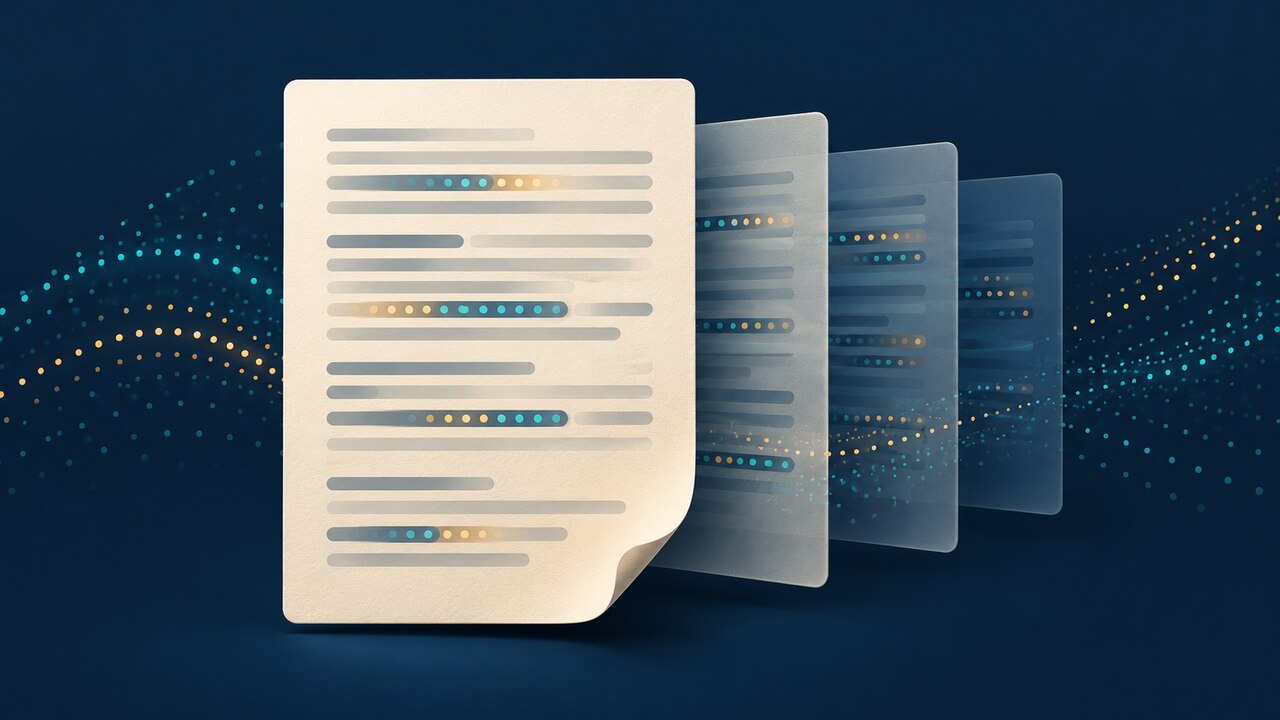
AI-generated editorial illustration for AI-XBlog. Conceptual artwork, not a detector screenshot.
Official sources
- OpenAI: Our approach to EU text provenance rules (October 5, 2026)
- OpenAI Help Center: Provenance signals in OpenAI-generated content
- textGrain: Entropy-Calibrated Watermarking for Language Model Text (technical report, October 5, 2026)
- OpenAI API: Content provenance
AI-XBlog Weekly Brief
Keep up with AI that actually works
Join the AI-XBlog Weekly Brief for major AI updates, practical workflows, useful tools, and editor’s picks. No daily noise.
Reader discussion
Join the discussion
Have you tried this tool or workflow? Share your experience, corrections, or questions. Useful reader feedback may help us improve this article.
All comments are reviewed before publication. Your email address will not be published. Promotional links and low-value spam are removed.